Category: Rubrik

  • Rubrik Build Roadshow – Brisbane Event Overview

    Rubrik Build Roadshow – Brisbane Event Overview

    On Monday, I took part in the Rubrik Build roadshow. This was an awesome opportunity to learn about working with Open Source projects and how to contribute from writing code, to writing/editing documentation, testing and version control and much more using GitHub, but that wasn’t all. Back in February, Rebecca Fitzhugh, Chris Wahl and their teams at Rubrik launched “Build” as project to bring awareness and education to working with open source projects and APIs. These events are not meant to be focused on Rubrik, but the lessons do connect to a Rubrik cluster as the API docs and software is readily available.

    I came across Build back when it launched in February and I have been a member of their slack group since it’s birth. After joining and looking through the plethora of content readily available through build.rubrik.com. I decided that I would attempt to write my first full script from scratch, just to put up on Github. Having always struggled with starting scripts from scratch, I started with planning out each step, in fact, I stepped through the process manually and event created a blog post about those steps – then Roxie set the challenge.

    https://twitter.com/RoxieAtRubrik/status/1120415276795928576

    I knew what I wanted to achieve and after having looked through several PowerShell scripts already up on the Build github repo, I had an idea on how it should look. After a couple of weeks writing and testing, I had a full script ready to put up.

    Once I had my script up publicly on Github, I linked it to the Build slack group where I got some great feedback, and even one of the main Rubrik PowerShell maintainers made a comment he was going to take part of my script and incorporate it into some of his.

    https://twitter.com/RoxieAtRubrik/status/1127946416523886592

    There was one hiccup with the Rubrik PowerShell module, but I’ll talk a little bit about that later.

    That is only a basic outline of my story of getting started, but without the Build community, I would not have dived as deep into APIs and scripting as quickly as I did here.

    So tracking back to the Build event, this was jam packed full of information, the session kicked off with Rebecca talking about the project, the idea behind it and the future outlook of build. She went as far as to talk not only about working with GitHub and the scripts and repositories available, but also the process and level of alerting her team receives when an issue is submitted on GitHub. This showed the level dedication the team has to ensuring that it’s contributors are looked after and have a fantastic experience while contributing. I found out first hand during my first script how enthusiastic the team is in helping as I was unable to find a call within the SDK to install a Volume Filter Driver. I went ahead and posted in the slack group about what I was trying to achieve and said that I was unable to find how to perform this particular action, and in no time, there was a response from Andy Draper who immediately went out of his way to write and test a call. I have since been informed that it is currently being worked on to be added to the SDK.

    After the first lesson and practice modules of using Github and how forks, branches, conflicts, etc. work, Chris then kicked off the main part of talking about APIs and about the different ways you might come across APIs and how to use them. The lesson took you through how to use the API Explorer (Similar to VMware’s API Explorer if you have ever use that). The lessons took you through how to authenticate using cURL and how to use tokens within the Rubrik cluster when making a call using an API.
    Chris then followed up with a crash course in PowerShell and giving a fairly in-depth look into how PowerShell came about and how easy it is to work with. This then went into discussing the different components and how modules are used and how easily they can be created.

    Overall, I thoroughly enjoyed the sessions, I learnt a lot about automation, APIs and working with the Open Source community that I didn’t know beforehand. I highly suggest that If you are a novice or even an intermediate at working with APIs and Automation that you seek out when Rubrik Build is coming to a city near you and get over to it and see for yourself what it is all about.

    If you are unable to make it to a Build event, then get involved through the build online community and start looking at how you can contribute to the wider Open Source Community. There are use cases available on the website so you can get a good idea on where you can get started.

    You can find out more about Rubrik and Build by checking out the videos from Cloud Field Day 5 
  • Rubrik Backup Service Windows Host Install Walkthrough

    Rubrik Backup Service Windows Host Install Walkthrough

    To be able to get the most flexibility out of your data management and backups, sometimes you need more to be able to interrogate your OS to be able to backup the applications that are running inside. Some backup providers use VMware Tools\Hyper-V Integration Tools to be able to perform application consistent backups, such as; MS SQL and MS Exchange. Whilst this may seem like a great idea to minimise the number of services running, this also means that the backup vendor loses some control over what their product can leverage and limiting them to the virtualisation eco-system.

    Rubrik delivers control and flexibility with their Rubrik Backup Service (RBS) which is available for Windows, Linux, AIX and Solaris, but also allowing for the ability to backup virtual and also physical servers. The RBS allows for granular control over applications such as MS SQL where it can backup each database with different SLA domains, as well as backing up file systems.

    This post will walk through deploying the RBS to a MS Server 2019 Server manually, although, there are several methods available to automate the installation, this walkthrough will show you . To automate check out the Rubrik Inc. Github and Rubrik Build for sample scripts and API documentation. For Example: Install-RubrikBackupService with PowerShell

    Required Opened Ports: 
    tcp 12800
    tcp 12801

    First off, downloading the Rubrik Backup Service installer is easily achievable by 2 methods. You can obtain the installer from under the Windows Host section on your Rubrik CDM web UI or via the hyperlink https://<rubrik cluster Ip-hostname>/connector/RubrikBackupService.zip


    Once downloaded you will need to extract the contents. Ensure that you keep all files together in the same folder as they are all required for the install. Each installation package is specific to the cluster it was downloaded from and will only work with that cluster.

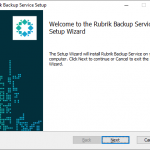
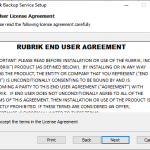
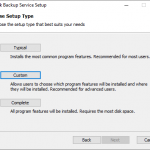
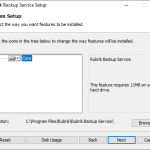
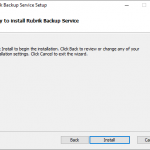
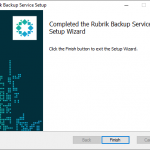
    The wizard is a simple “Next, Next..” process. Open the MSI file. When you select custom, you do have the ability ti change the installation location. Once completed, click Finish.

    Open up the computer Services manager and check that the “Rubrik Backup Service” is running.

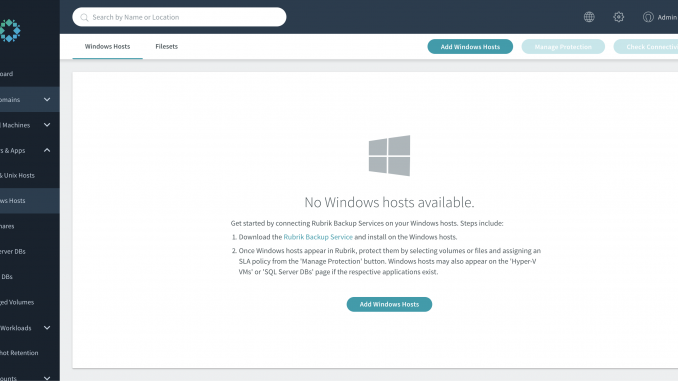
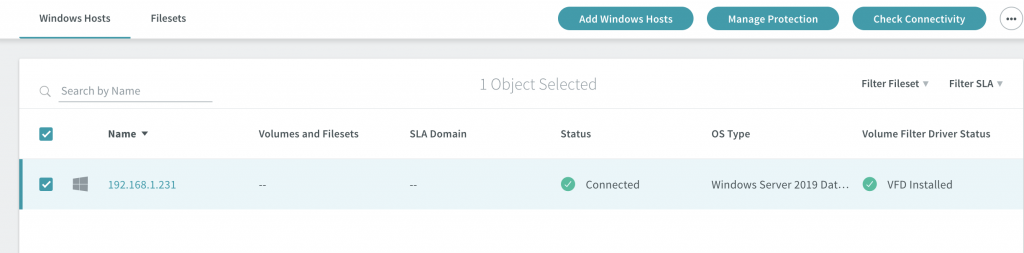
    At this point, you will not see the host show under Windows hosts under the web UI, you will need to click on the “Add windows hosts” button – either in the main screen or in the top bar.


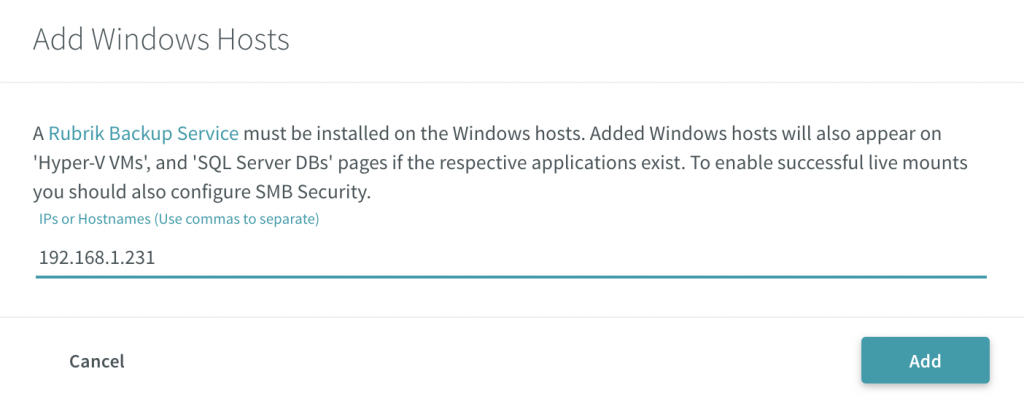
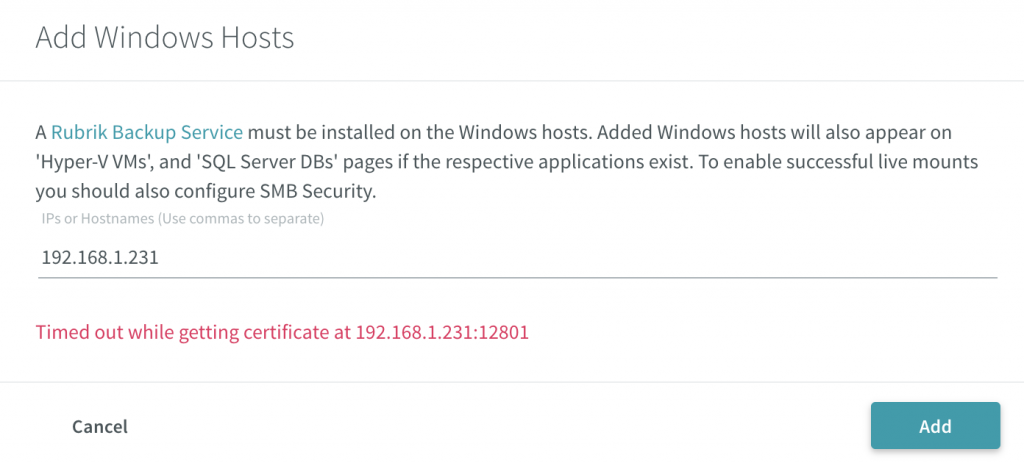
    When adding the hosts you can either do this by IP or hostname. Ensure that your DNS is configured correctly prior to trying to add via hostname – click Add. Adding the host will create a secure connection between the host and the cluster.


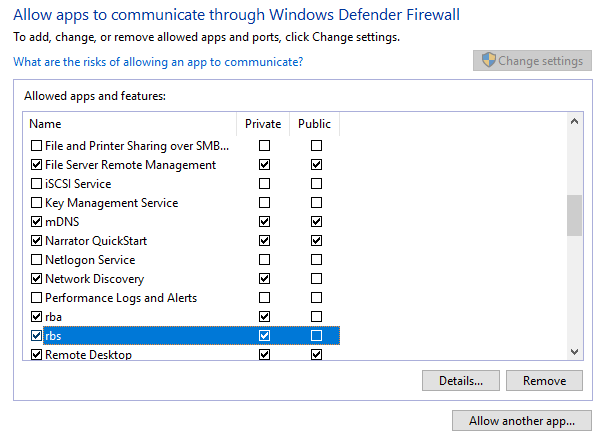
    If you run into an issue where the cluster is unable to connect to the host or display an error regarding retrieving the certificate, make sure you configure your firewall. As this lab is on a single subnet the cause for the error was the Windows Defender Firewall. Add the required allow access and retry added the Windows host to the cluster.


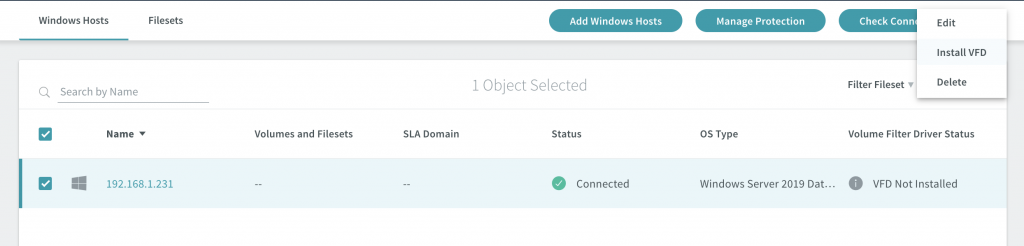
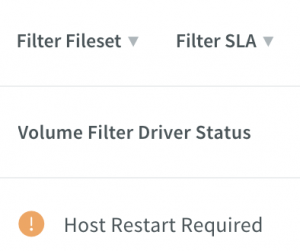
    The host will show a status of “Connected.” You will need to install the Volume Filter Driver (VFD) to enable the cluster to track changes to the blocks as well as assist with the performance of the incremental backups. Select the host you want to install the VFD on and click the 3 dots in the top right corner -> Select Install VFD -> Wait until the Volume Filter Driver Status changes to “Host Restart Required” and reboot the host. (Refresh the UI if you don’t see it update after some time.)


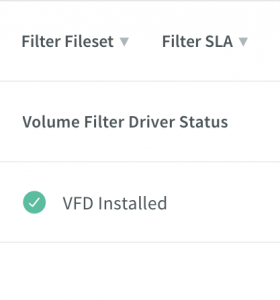
    After reboot, you should now see the status change to “VFD Installed”

    The Windows host is now looking ready to go and the last two items are to set up the protection by adding the SLA domain and content to be protected

    .
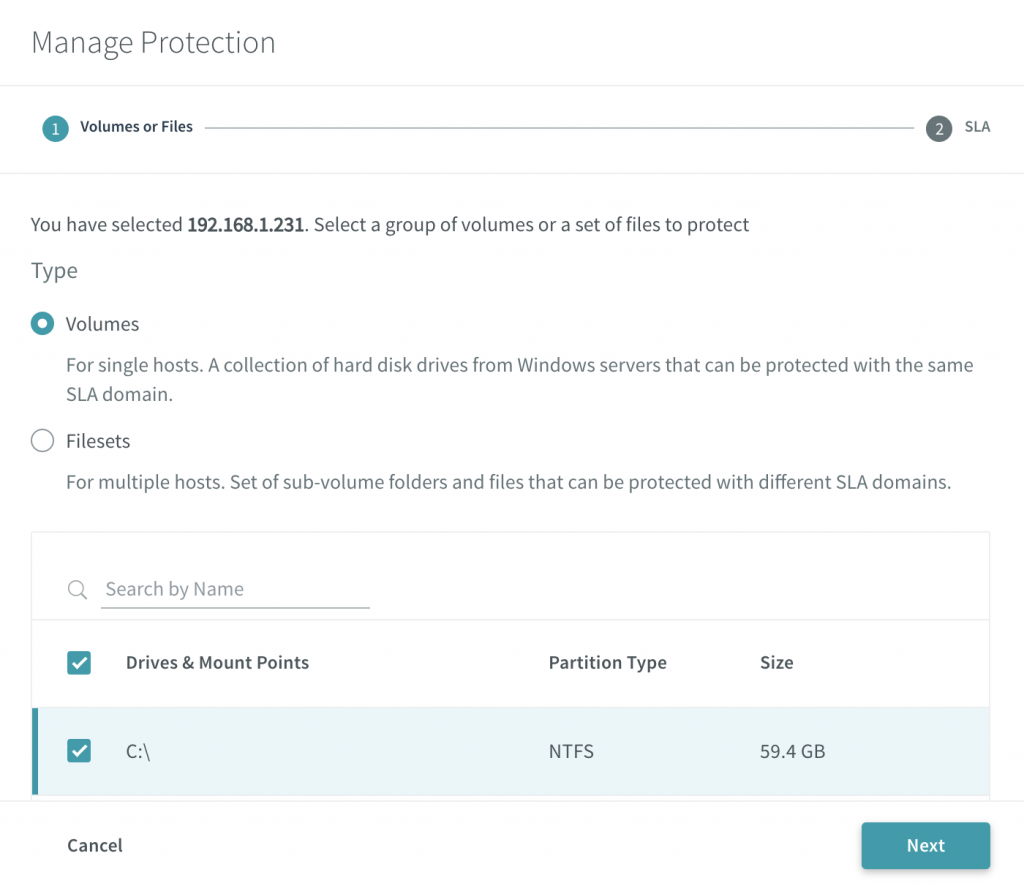
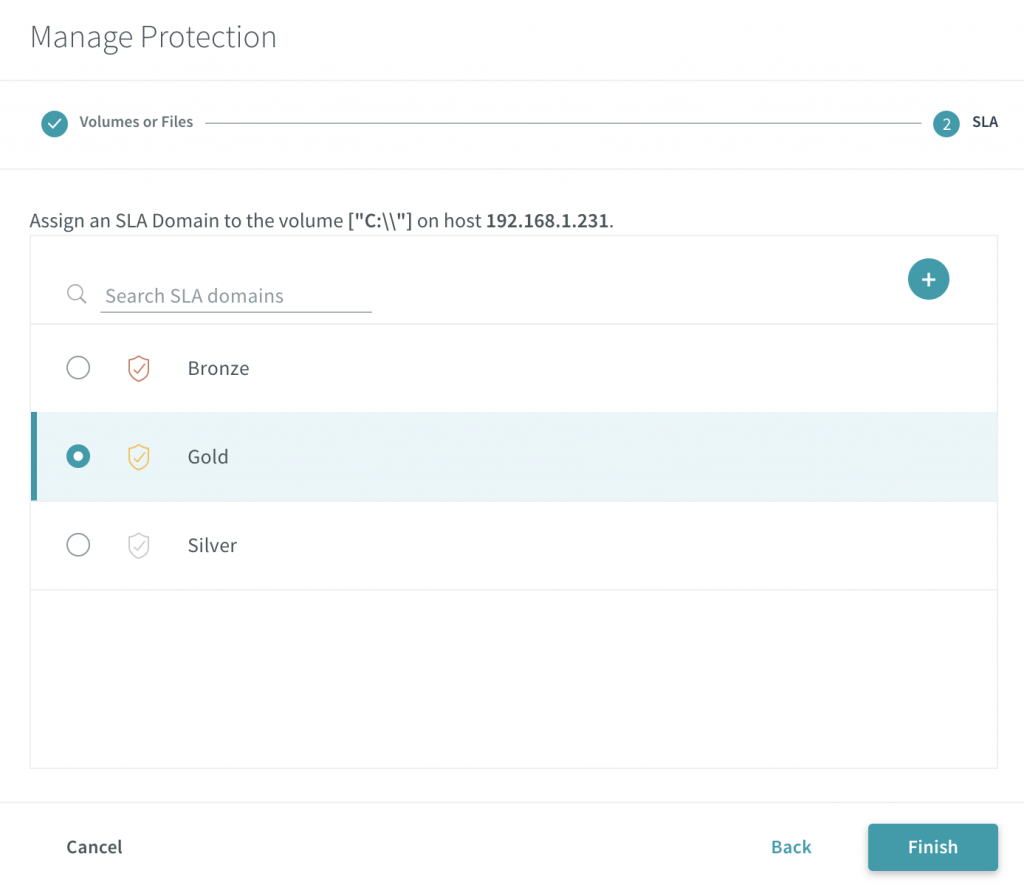
    Select the host and click the “Manage Protection” button. Here you can choose to backup set you want to protect, whether it is the volumes or filesets.

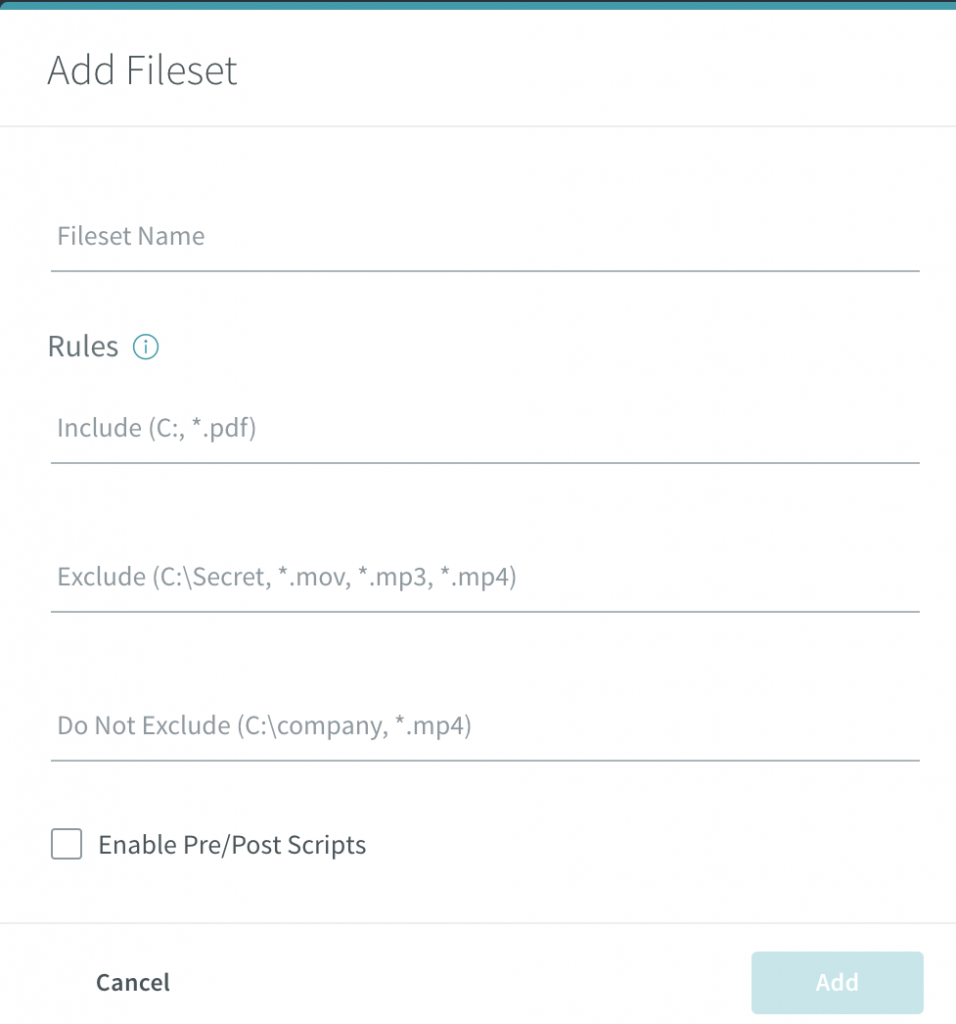
    When adding a fileset, you can set rules around whether to include or exclude certain folders and file types.


    Once you have set your backup set, you can then assign the SLA domain that meets your requirements for your backup SLA. For more about SLA Domains see SLA Domains Global Scale


    It is a very simple process which, as mentioned above, this can be automated through the use of scripts and APIs, however this was just a walkthrough of the process. Ensure to check out the Rubrik Build site. There are also other scripts available on the Rubrik Build GitHub repo along with various SDKs for use with Rubrik CDM.

  • Rubrik Full Bare Metal Recovery

    Rubrik Full Bare Metal Recovery

    Recently I wrote a post on Rubrik’s latest major release, 5.0 Andes. That’s 5 major releases since the very beginning in January, 2014 and shipping the first Brik in November of the same year.  Much like the appliances themselves, that is just an incredible speed to get up and operational to send onsite to a customer! You can check out the full timeline here.
     
    I do however want to dig a little bit deeper into some of the items that were released as part of the 5.0 announcement. There were a number of things I had already mentioned, but for this post I want to go further into the Windows Bare Metal Recovery.
    So why do we want to deal with physical servers, isn’t everything virtualized? Well, no. Not everyone’s environments are virtualized as there are many reasons why an enterprise may need to continue to run physical machines for licensing or hardware requirements,  and it is imperative that they are backed up accordingly and even more-so easily recoverable in the event of a failure.
    Rubrik have now met this need with their full Windows Bare Metal Recovery (BMR) feature as part of the Rubrik 5.0 Andes release, backing up at block level while ensuring even the MBR/GPT partitions are secured. BMR isn’t new to Rubrik, but in the past it started only protecting file sets and files, in 4.2 it was able to protect volume partitions, however, now in 5.0 Rubrik offer FULL BMR by introducing the Volume Filter Driver (VFD) which can be installed optionally to work with the Volume Shadow Copy Service (VSS) and is used for Change Block Tracking (CBT) to decrease backup times.
    On first run, the Rubrik Backup Service (RBS) will capture a Crash-Consistent Volume-based snapshot and backed up onto the Brik and is stored as Virtual Hard Disk v2 (VHDX) which makes it easily available for P2v. Once captured, then incremental snapshots are taken with the VFD checking and creating a bitmap of changed blocks to ensure faster backup windows.
    The ease of backup is incredibly simple, and recovering from a disaster is just as good. You will need to use the Rubrik WinPE Tool to assist in making you WinPE boot image, but once created, you can then boot your target system into the PE. This environment will allow you to log in and mount the samba share and kick off the restore PowerShell script. BMR also support Live Mount which will allow you to mount your required volume snapshot that you want to restore from. As the first part, the script will obtain and prepare you disk layouts prior to copying down your boot partitions and data. Once the restore is completed, reboot and then you can login and confirm that all the volumes are intact and all data is there and accessible. If you are migrating to a different physical tin, then sensible target hardware needs to be considered, however there is no requirement to match the original source hardware.
    One last feature of the 5.0 release is the ability to migrate from a physical machine. There are 3 options for migration;

    • P2V: Migrate from physical to virtual, either VMware vSphere or Microsoft Hyper-V
    • P2P: Migrate from physical to similar or dissimilar physical hardware
    • P2V: Migrate from Physical to the cloud, whether it is Microsoft Azure or AWS

    It really is just that easy to do and those who are still bound by physical servers can breathe again knowing that Rubrik can take care of their Full BMR needs, as well as being able to meet the Enterprises’ requirements of off-site long term storage by pushing to the cloud.

  • Rubrik announces Andes 5.0

    Rubrik announces Andes 5.0

    Alright, backup and take a seat for this one!  See what I did with the title? Ok, maybe I’m a kinda a little excited to write a post this time. Not only is this my first briefing with Rubrik, but it is also a jam packed new release with some amazing new features.  In this post, I am just going to briefly mention the new features and what to expect, as I hope over the next week, I can dive in deeper into a few of them..

    So starting from the top, since 2015 when Rubrik rebased their v1.0, they have been making some significant headway in new feature and almost releasing a a major release within the same year of the previous. Skipping a bit over 3 years since that first release and here we are with Andes 5.0, this is staggering to see a company raising the bar.
    As I mentioned above, this is a just a quick overview to get your tastebuds watering, so I’ll move right in to mentioning the all the gossip!
    Rubrik is really looking into the Digital Transformation buzz that we are all see happening at the moment, and they are rapidly adapting to keep up and get infant of the market to meet the Digital Transformation demand.
    Oracle: 
    When you work with databases, you know how quickly they update and change, and being able to recover your database in the event of a disaster is time critical. That’s where Rubrik now has Instant Recovery and Live Mount to achieve almost near zero Recovery Time Object. This is great for test/Dev as the databases would be an almost instant clone.
    NAS Direct Archive:
    Sometimes you may already have a file store in place backing up\replicating from an onsite NAS, this is good, but it can be better with Rubrik’s NAS Direct Archive. This new feature will allow you to continue to backup you NAS to a remote store (Clud, NFS Store, or Object store) however, it packs on extra simplicity by crawling through the data for you and indexing it automatically to save you time when you need to recover from that remote storage.
    Elastic App Service:
    The EAS is a new storage repository that provides a highly available, storage efficient distributed file repository over NFS or Secure SMB. This platform allows nearly any application or OS to write direct to the volume, opening and closing the connection with scripted API calls. The EAS works like any other plain old NFS/SMB but when the connection is closed a Point-In-Time snapshot is taken and the data is secured. Rubrik has again made it easy by creating some pre-tuned default tags for different databases, you can tag the volume with this predefined tags and let the Brik for the rest.
    SAP HANA Protection Certified Solution.
    Rubrik has now been awarded the SAP HANA Certified Solution certification leveraging the backint API to assist with backup and restore using SAP HANA Studio or Cockpit.
    Microsoft SQL Enhancements:
    MS SQL has been supported since version 3.0, however there have been some major updates to the platform to help make the process more efficient. Change Block Tracking has now been enabled with a new filter driver, this will ensure that you are only backing up the blocks that have had any changes made and decreasing the backup time. Rubrik can also now invoke VSS and take snapshots of the database to get a point-in-time consistent backups.
    Windows Server Bare-Metal Recovery:
    Just when the world was moving away from physical as virtual infrastructure offers more in terms of high availability, lower power consumption, better resource utilisation, etc… Rubrik has come out with Bare-Metal backup and recovery, protecting those who still run in a physical world. The perfect thing about this is that your Brik will do all the work for you in taking a backup of the MBR and GUID Partition Table while tracking the changed blocks at the kernel level. In the event of a failure, there are some manual steps including booting into WinPE, however, this is a much more efficient and accurate way than restoring from tapes!
    There is also the added benefit this can be use for P2V – so not all hope is lost in those still running physical workloads!
    Polaris protection for Office365:
    Earlier this year, Rubrik announced their Polaris SaaS Platform offering simple policy-based management to backup and recovery of your Office365 environment. This allows customers to mange their O365 backup and recovery policies through the Polaris interface, allowing them to use the same SLA policies as their on-prem solution. This integration also allows for global file search and single object recovery.

    As mentioned, this is just a brief overview for now. There is a lot crammed into this release, too much to put into one post. Stay tuned and continue to check out other posts around this release.
    To learn more check out: www.rubrik.com